
CBP proposes new informal-entry rules for shipments valued at $2,500 or less
CBP NPRM would reshape informal entry for goods valued at $2,500 or less: electronic Type 11, electronic informal mail Type 13, broker-as-IOR for certain entries, and Basic Importation and Entry Bond requirements. Comments due December 7, 2026.
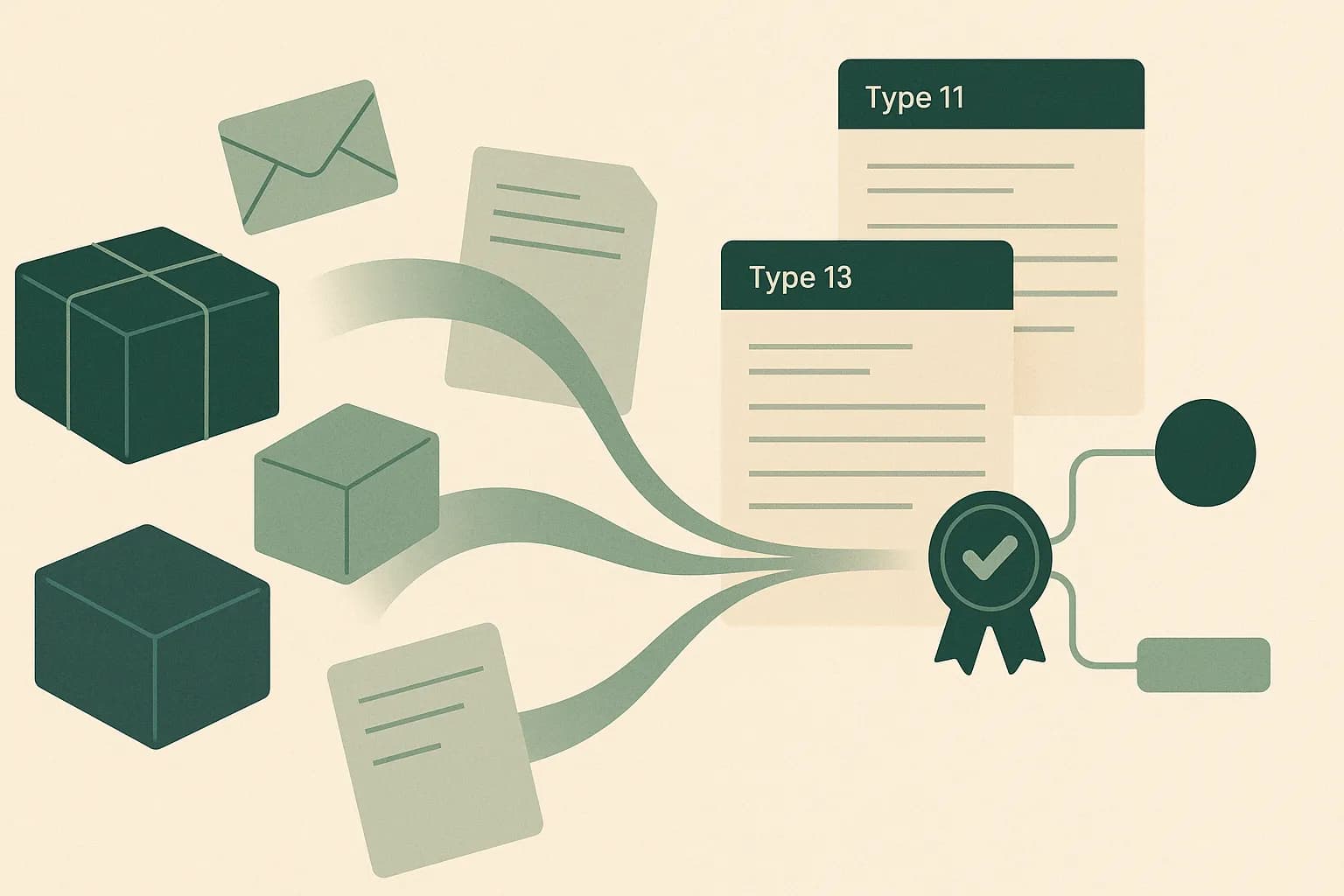
CBP published a proposed rule that would reshape informal entry for goods valued at $2,500 or less. FR Doc. 2026-20650 (91 FR 64532-64563; Proposed Rule; Docket USCBP-2026-0298; RIN 1685-AA38) was published October 8, 2026. It would amend 19 CFR Parts 113, 128, 141, 143, and 145. This is a proposed rule only. There is no effective date until a final rule publishes.
Comments due on or before December 7, 2026 via regulations.gov docket USCBP-2026-0298. Proposed package: Type 11 electronic filing and final deliver-to party data, new electronic informal mail Entry Type 13, broker-as-IOR for certain informal entries, and Basic Importation and Entry Bond requirements.
What CBP is proposing
- Modify filing requirements for informal entries of goods valued at $2,500 or less (Type 11).
- Establish a new electronic informal mail entry type (Entry Type 13) for merchandise entering through the mail environment.
- Require additional carrier data for mail shipments (including matching tracking numbers).
- Impose bonding requirements for certain informal entries (Basic Importation and Entry Bond for Type 11 and Type 13).
Docket USCBP-2026-0298 · RIN 1685-AA38 · amends 19 CFR Parts 113, 128, 141, 143, 145
Comments: on or before December 7, 2026 (regulations.gov)
Contact: Christopher Mabelitini, Director, IPR & E-Commerce Division, OT, CBP, (202) 325-6915
De minimis context (already suspended; statutory end date)
The NPRM sits on top of the collapse of the $800 de minimis exemption under 19 U.S.C. 1321(a)(2)(C). CBP states that de minimis treatment for low-value imports has been suspended since at least August 29, 2025. Two CBP interim final rules published June 24, 2026 announced indefinite suspension of the de minimis exemption in CBP regulations, effective June 24, 2026 (91 FR 37789 for non-postal modes; 91 FR 37801 for the postal environment). Separately, the One Big Beautiful Bill Act (Pub. L. 119-21, section 70531(b)), enacted July 4, 2025, terminates the de minimis exemption effective July 1, 2027.
Type 11: electronic filing, timing, and final deliver-to party
For general informal entry (Type 11), CBP proposes to require electronic filing upon or prior to the date of importation (using the 19 CFR 101.1 definition of date of importation), and to require identification of the final deliver-to party (including address) when that party differs from the ultimate consignee on the entry summary. The NPRM also proposes removing the $250 informal-entry ceiling for merchandise classified under Chapter 99, Subchapters III and IV, HTSUS, so goods valued over $250 but not more than $2,500 that carry temporary trade remedies (for example Section 232 Chapter 99 codes) would no longer be forced out of informal entry on that $250 limit alone.
Right to make entry: broker as IOR for certain informal entries
CBP proposes that a consignee that is a foreign postal operator, USPS, freight forwarder, or carrier appoint a licensed customs broker to act as importer of record for shipments valued at $2,500 or less that are not covered by the exception in 19 CFR 143.26(b). The NPRM describes this as clarifying that the broker-as-IOR concept already used for formal entries would also apply to Type 11 and the proposed Type 13 informal mail entries. Do not over-read it: the proposal is limited to the classes of consignee and the exception structure stated in the NPRM.
New Entry Type 13: electronic informal mail entry
CBP proposes a permanent electronic informal mail entry type (Type 13) for mail shipments valued at $2,500 or less. Lessons from the Type 86 low-value electronic entry test informed the Entry Type 13 mail test announced at 91 FR 38007 (July 24, 2026). See also the Library note on the ACE Entry Type 13 test (entry-type-13-mail-ace-test). Proposed Type 13 data includes matching carrier and filer tracking numbers (Universal Postal Union S-10). Unentered informal mail articles would be deemed voluntarily abandoned if no entry is filed within 15 days of importation, then processed under USPS procedures (destruction or return).
Bonding: Basic Importation and Entry Bond, plus $1,000 liquidated-damages floor
CBP proposes that all Type 11 and Type 13 filers obtain a Basic Importation and Entry Bond (single transaction or continuous) with the conditions in 19 CFR 113.62. Where a consignee must use a broker as IOR, the broker's bond would be obligated. For listed bond-condition breaches on Type 11 and Type 13, CBP proposes a new minimum liquidated-damages amount of $1,000 per breach (the greater of merchandise value or $1,000, with higher multipliers for restricted, prohibited, or alcoholic-beverage merchandise as stated in the NPRM).
Informal-entry and mail process changes affect how low-value goods are entered, who appears as IOR, and what bond and data trail exists. Ordinary customs duties (and many Section 301/232 duties) can still be drawback-eligible when merchandise is later exported or destroyed. Entry type and IOR identity matter for claim support. AD/CVD remain outside drawback (19 U.S.C. § 1677h; see AD/CVD drawback exclusion).
Action items
- File comments by December 7, 2026 on docket USCBP-2026-0298 if Type 11/13, broker-as-IOR, data, or bond proposals affect your operations.
- Model process, data, and bond changes for Type 11 and Type 13 now. Do not invent an effective date; wait for a final rule.
- Brokers and e-commerce IORs should map who will be IOR, which bond will attach, and how final deliver-to party and tracking-number matching will be collected before arrival.
- Keep drawback documentation expectations in mind if low-value goods later export. See how to file a duty drawback claim.
- FR Doc. 2026-20650 (91 FR 64532-64563): CBP proposed rule on low-value informal entry; Docket USCBP-2026-0298; RIN 1685-AA38; comments due on or before Dec 7, 2026. Proposed rule only; no effective date yet.
- Proposals: electronic Type 11 with filing by or prior to date of importation and final deliver-to party data; new electronic informal mail Entry Type 13; carrier tracking-number matching; broker-as-IOR for certain informal entries; Basic Importation and Entry Bond for Type 11/13; $1,000 minimum liquidated damages for listed breaches.
- De minimis: suspended since at least Aug 29, 2025; CBP IFRs effective June 24, 2026; statute terminates exemption July 1, 2027 (One Big Beautiful Bill Act).
- Type 86 lessons informed the Entry Type 13 mail test (91 FR 38007). Unentered informal mail deemed abandoned after 15 days of importation under the proposal.
- Entry type and IOR identity reshape the documentation trail for later drawback on ordinary (non-AD/CVD) duties. AD/CVD stay outside drawback.
- Low-Value Shipments (91 FR 64532; FR Doc. 2026-20650) · U.S. Customs and Border Protection, Department of Homeland Security
This article is for general information and is not legal or tax advice. Drawback eligibility depends on your specific facts, and final refunds are determined by CBP at liquidation. Consult a licensed customs broker or attorney for your situation.